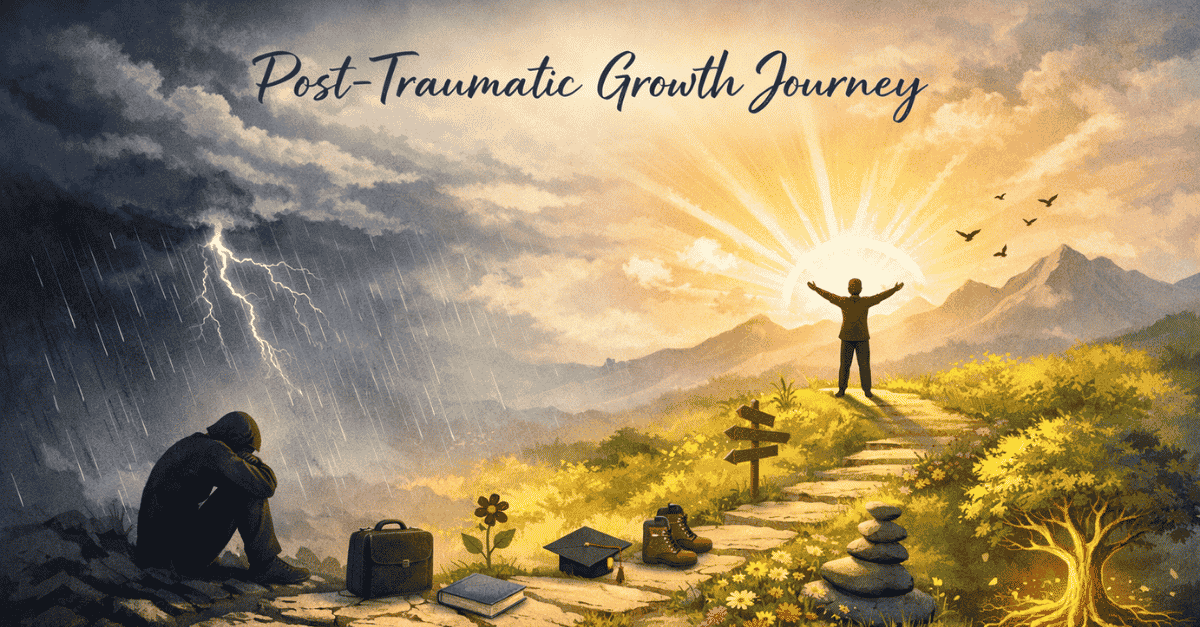
This week already I have had a wonderful conversation with a new coach who asked me a simple but powerful question: “What is Post‑Traumatic Growth?”
He’d never heard the term before, and his curiosity opened the door to one of my favourite topics — how humans can transform after difficult experiences, not just recover from them.
What Is Post‑Traumatic Growth?
Post‑Traumatic Growth (PTG) refers to the positive psychological change that can occur after a period of struggle, adversity, or trauma. It’s not about “bouncing back” — it’s about bouncing forward, developing new strengths, perspectives, and ways of living that weren’t possible before the challenge.
Researchers describe PTG across areas like:
- A deeper appreciation of life
- Stronger relationships
- Increased personal strength
- New possibilities and life directions
- Spiritual or existential growth
It’s the idea that pain can be a catalyst for wisdom, clarity, and a new way of being.
My Experience: When Change Isn’t Enough
When I think about PTG, I think about my own journey.
Years ago, I left a role because I was completely burnt out. I felt helpless, hopeless, and utterly depleted. I thought the solution was simple — leave the job, change the environment, start fresh. And for a moment, it worked. A new role in a completely different space felt exciting, energising, and full of possibility.
But within six months, the same feelings crept back in.
The heaviness.
The exhaustion.
The sense of being lost.
It hit me hard: I had carried my burnout with me.
I didn’t know about compassion fatigue or burnout back then. I didn’t understand that simply changing jobs doesn’t heal the person doing the job. I was the same worn‑out version of myself, just placed in a new setting — and of course I fell into the same patterns of over‑giving, over‑working, and over‑caring.
That was my turning point.
The Shift Toward Growth
Once I learned about compassion fatigue and burnout, everything changed. I realised that if anything in my life was going to improve, I had to change first.
So I did what lifelong learners do — I went back to study.
I surrounded myself with mentors who challenged me, supported me, and held me accountable.
I learned how to coach myself toward compassion satisfaction — the feeling of being fulfilled, energised, and connected to purpose rather than drained by it.
As I healed, I set boundaries.
I changed my habits.
I rebuilt my identity as a healthy, well, and grounded human being.
And that’s where my Post‑Traumatic Growth emerged.
Today, I have the privilege of working with health and education professionals, helping them understand fatigue, burnout, and compassion satisfaction so they can stay in the jobs they love — without losing themselves in the process.
The Heart of It All
Post‑Traumatic Growth is absolutely possible.
But it doesn’t start with change on the outside.
It starts with looking inward, being honest about how you feel right now, and choosing to make the shifts that support your wellbeing.
Growth isn’t about becoming a new person. It’s about becoming the healthiest version of yourself — the one who can thrive, contribute, and feel joy again.
Here’s to the courage it takes to pause, reflect, and grow forward.
Your future self will thank you for it.