Over the weekend, I received a message from someone following our 21 Perspectives of Forgiveness challenge on Instagram. Then, almost as if the universe wanted to underline the point, I had a phone call this morning with someone facing a remarkably similar struggle.
Both were navigating difficult workplace environments. Both described leaders whose emotional reactions often dominated the atmosphere around them. And both found themselves asking the same question:
“How do I stop reacting to someone else’s reactions?”
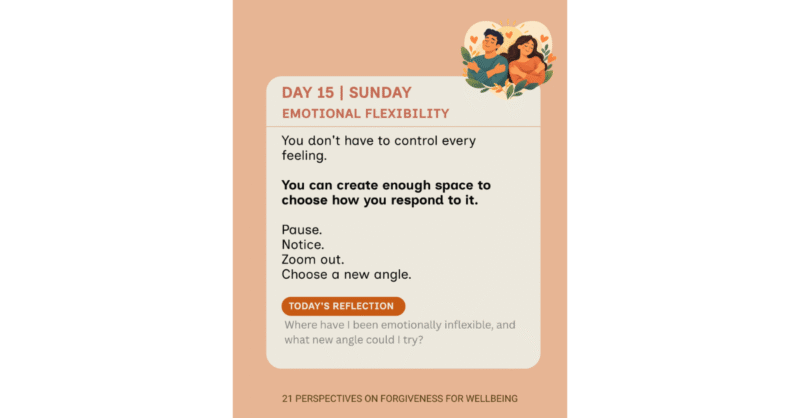
Their comments brought us back to Day 15 and the idea of emotional flexibility.
One part of that reflection particularly resonated:
“Emotional flexibility isn’t about controlling your feelings. It’s about creating room inside yourself. When something challenging happens, rigidity locks you into one interpretation, one story, one reaction, one emotional posture. Flexibility, on the other hand, gives you options. It lets you pause long enough to notice what’s happening, understand why it feels intense, and then gently pivot toward a response that feels more aligned with who you want to be.”
What both people recognised was that emotional flexibility isn’t really tested when life is easy. It’s tested when someone else’s emotions are demanding that we join them.
When a leader is frustrated, defensive, angry, anxious, or reactive, it’s incredibly easy to be pulled onto their emotional dance floor. Before we know it, we’re matching their energy. We become defensive too. We replay conversations all night. We carry their mood home with us.
The challenge is that when we’re standing in the middle of the dance floor, everything feels immediate, personal and urgent.
This is where the idea of “zooming out” becomes so powerful.
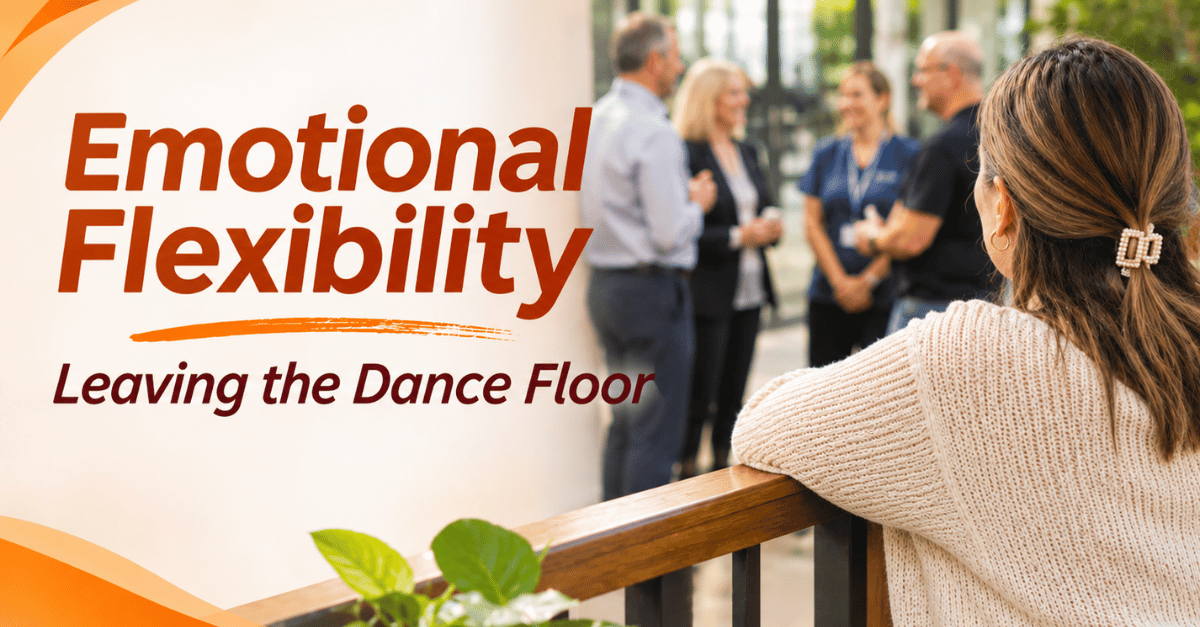
A few weeks ago, we explored the metaphor of getting off the dance floor and moving to the balcony. From the balcony, you can still see what’s happening, but you’re no longer trapped inside every movement.
- You begin to notice things differently.
- You see that the person’s reaction may not actually be about you.
- You see patterns rather than incidents.
- You see pressures, fears and habits that might be driving their behaviour.
- You see choices where previously you only saw threats.
- Most importantly, you reconnect with your own agency.
Zooming out doesn’t mean excusing poor behaviour.
It doesn’t mean becoming passive.
It doesn’t mean pretending something doesn’t hurt.
It simply means creating enough distance between the trigger and your response that you can choose your next step consciously.
Sometimes that distance is created by asking:
- What else might be true here?
- What story am I telling myself right now?
- Will this matter in six weeks?
- What part of this situation is actually mine to carry?
- What will I distance myself from here, so it doesn’t take my energy?
- How do I want to remember showing up in this moment?
These questions don’t change the situation.
They change your relationship with the situation.
Emotional flexibility is the ability to hold two truths at the same time:
“This is difficult.” And “I still have choices.”
That’s a powerful form of forgiveness.
Not necessarily forgiveness of another person.
But forgiveness of the belief that you have to be trapped inside every emotion that passes through the room.
The people I spoke with this week weren’t looking for ways to change their leaders.
They were looking for ways to remain themselves.
That might be the real gift of emotional flexibility.
It allows us to navigate difficult environments without becoming shaped by them.
To step off the dance floor when we need to.
To move to the balcony.
To widen the lens.
And from that wider view, to choose the response that reflects who we are, rather than simply reacting to what is happening around us.
Reflection Question
Where in your life might you benefit from stepping onto the balcony this week?
What situation would look different if you gave yourself permission to zoom out before responding?